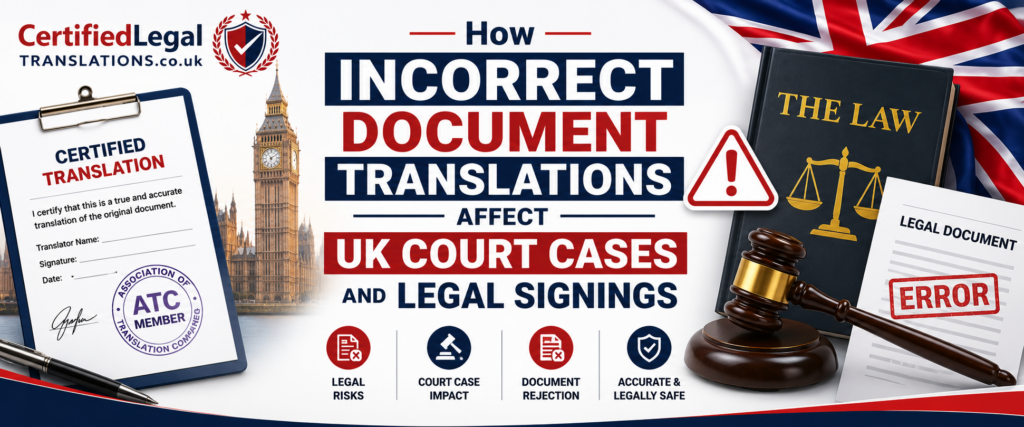
Imagine waiting three months for a court date. You walk in ready. Then the judge looks at your translated document, frowns, and hands it back. The hearing is adjourned, and you are back to square one — this time with a bigger legal bill.
It sounds dramatic, but it happens every week across the UK. And it is rarely the big things that cause it. Most of the time, one small slip in a translated document is all it takes to delay a court case or freeze a legal signing.
Over the past 15 years, we have translated legal papers for UK courts, solicitors and everyday clients. The same errors keep coming back. So we have gathered the 18 that cause the most trouble — the common legal translation mistakes that quietly derail otherwise solid cases.
Read on to see how these errors delay legal proceedings, why documents get rejected, and how to make sure yours never does.
Certification and Compliance Blunders in UK Courts
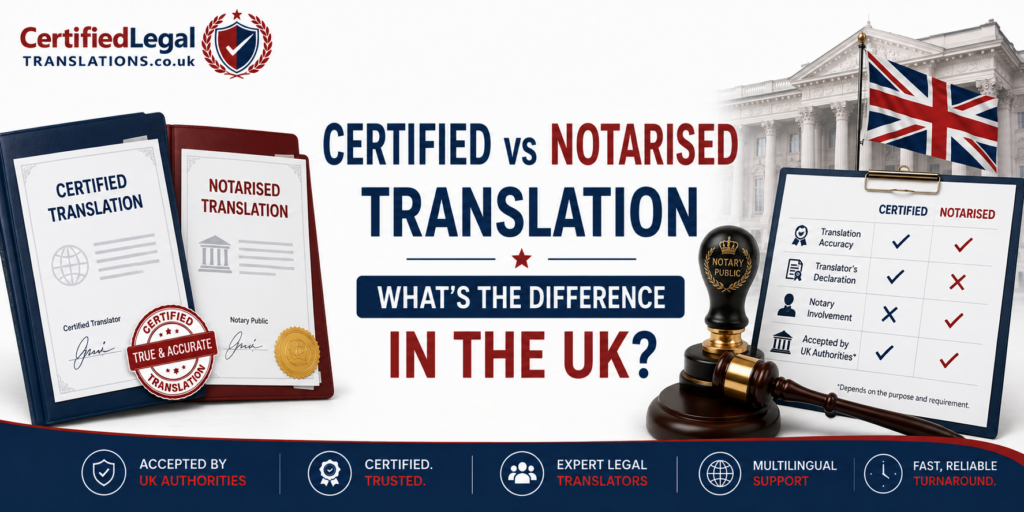
Before a judge reads a single word of your translation, they check one thing: is it properly certified? UK courts follow strict certified translation requirements, and they do not bend them. If the certification is missing or wrong, the document is refused on the spot — one of the biggest reasons legal translations get rejected. Getting your court document translation certified correctly is simply the price of entry.
The Missing Declaration Trap
Every certified translation must carry a signed statement from the translator, confirming the work is true and accurate. Leave it off, and the court has no way to trust the document. It is one short paragraph — but without it, your whole case can be left waiting.
Using Unaccredited Translators
Courts and officials trust translators backed by a professional body, such as the ITI, CIOL or ATC. Hand in work from an unaccredited linguist, and you hand the other side an easy way to challenge it. A quick check of your translator’s credentials can save you weeks of argument.
The Self-Translation Mistake
Fluent in both languages? It still does not count. In the UK, you cannot translate your own legal documents, and neither can a relative. The translation has to be independent, so a court knows nobody has bent the wording to suit their own case.
Forgotten Apostilles and Legalisation
Translation is sometimes only half the job. Many foreign documents also need an apostille or FCDO legalisation before a UK court will accept them. Forget this step, and your evidence can be turned away before anyone reads it. If you are unsure, check whether your paper needs apostille translation first.
Terminology and Phrasing Errors That Break Contracts
Legal words are not ordinary words. Each one carries weight, and a single wrong choice can twist the meaning of a whole clause. This is where the real consequences of inaccurate legal translation show up — a contract stops making sense, and a signing grinds to a halt while lawyers pick over the wording. Precise contract translation is what keeps both sides reading the same deal.
Word-for-Word Literal Translation
Swapping words one by one might work for a menu. For law, it fails badly. A literal translation often reads awkwardly or, worse, says something the original never meant. Skilled legal translation carries the meaning across, not just the vocabulary.
Mixing Civil Law with UK Common Law
Most of Europe runs on civil law. The UK runs on common law. They look similar from a distance, but their terms and ideas often do not match. A translator who blends the two can produce a document that means one thing back home and something else entirely in a British court.
The “Shall” versus “May” Confusion
Two tiny words, a world of difference. In legal English, “shall” is a duty and “may” is a choice. Mix them up, and you have quietly changed who must do what. In a contract or court order, that slip alone can spark a dispute and hold up a signing.
Legal “False Friends”
Some words look identical across two languages but carry very different legal meanings — translators call them “false friends”. The text reads perfectly, yet the legal effect is wrong. These traps stay almost invisible unless a legal specialist is checking the wording.
Identity and Data Mismatches That Raise Red Flags
UK courts and the Home Office take identity seriously. To them, a small mismatch between your papers is not a typo — it looks like a reason to worry. That is why these document translation errors in court cases often cause the longest hold-ups. An official has to stop, query the paper, and wait for it to be put right.
Name Spelling Discrepancies
Your translated name must match your passport, letter for letter. Add one, drop an accent, and suddenly “Sofía” and “Sophia” read like two different people. To an officer comparing documents, that alone is enough to freeze everything until it is explained.
The Dangerous Date Format Flip
The UK writes dates as day, then month, then year. Plenty of countries do the opposite. Translate 05/06 carelessly, and May can silently become June. On a court timeline or a contract, that one flip can rewrite the whole story.
Financial and Numerical Typos
Numbers deserve the same care as words. A wrong court fee, a mistyped account number or a slipped decimal point can do real damage. Change a single figure, and a debt of hundreds becomes thousands. Every number has to be checked against the original, twice.
Formatting and Visual Omissions That Cause Delays
Judges and solicitors rarely read a translation on its own. They read it beside the original, line by line. So when the two do not match on the page, cross-checking turns into a slow, frustrating hunt. This is a quiet way translation errors delay legal proceedings, even when every word is spot on.
Structural and Paragraph Mismatch
A good translation mirrors the shape of the original — same paragraphs, same headings, same clause numbers. When the layout drifts, a judge has to work just to line the two documents up. That effort alone can slow a hearing down.
Ignoring Official Seals, Stamps and Logos
Stamps and seals are part of the story a document tells. A careful translator notes each one, like “[Round seal: City Registry]”, so nothing goes missing. Skip them, and the paper looks incomplete — or even fake — and officials are quick to send it straight back.
Deleting Illegible or Blurry Text
What do you do when part of a document simply cannot be read? The right answer is to flag it clearly, with a note like “[illegible]”. Quietly deleting the blurry part hides information, and a court can read that as tampering. One small omission can undo the entire translation.
Quality Control and Workflow Mistakes to Avoid
Even a brilliant translator can be let down by a sloppy process. Errors slip through when work is rushed, unchecked, or left to the last minute. This is how a technically good translation still manages to miss a court deadline.
Blindly Trusting Machine Translation
Free tools like Google Translate look like an easy shortcut. But the risks of machine translation in legal documents are real and serious. AI muddles pronouns, names and legal terms, and it has no sense of context. One tool once turned “I” into “we” — and changed a witness’s entire statement. Legal work still needs human judgement.
Skipping the “Second-Eye” Review
Nobody catches all of their own mistakes. That is why a second legal expert should always read the finished translation. This fresh pair of eyes picks up wrong terms, typos and missing lines before they ever reach a courtroom. Cutting the step feels like saving time — until it costs you far more.
Over-Translating Registered Brand Names
Company names and trademarks usually stay exactly as they are. Translate a registered brand name, and you can invent one that does not legally exist. Courts and registries are then left unsure what they are looking at. When in doubt, leave official names untouched.
Last-Minute Submissions and Poor Timing
Proper legal translation cannot be rushed. Start too late, and you either miss the filing deadline or push the translator into a hurried job full of errors. The fix is simple: give the work room for translation, review and certification, well before your date.
Keeping Your Court Case and Signing on Track
The good news is that every mistake above is avoidable. Knowing how to avoid translation delays in legal signing and court work really comes down to a few steady habits:
- Ask the court, solicitor or authority what they need before you order anything.
- Choose an accredited legal translator, never a free app or a helpful relative.
- Send clear, full scans so every stamp, seal and note is captured.
- Leave time for translation, a second review and certification — never rush the final step.
At Certified Legal Translations UK, these checks are simply part of how we work. In over 15 years we have handled 12,000+ documents, with a 98% first-time acceptance rate. Our translations are trusted by UK courts, solicitors, the Home Office, HMRC and Companies House. And when the clock is against you, we offer same-day and 24-hour turnaround from £30 per page.
Frequently Asked Questions
Who is liable if a translation mistake delays my case or voids a signing?
It depends on who made the error and what your agreement says. A good translation company stands behind its work and corrects its own mistakes at no extra cost. We are not solicitors, so for legal liability, check your contract and speak to your solicitor.
Can the other side challenge my translation to delay the hearing?
Yes. In a dispute, the opposing party can question a translation’s accuracy, and the court may pause to review it. A certified translation from an accredited translator is far harder to challenge.
Can a translation error be fixed after I submit it, without starting over?
Often yes, if you catch it early. A translator can issue a corrected, re-certified version of the same document. But once a court has relied on it, putting it right takes longer.
Do certified translations expire before a court date or property completion?
The translation itself does not expire. But the original document may need to be recent, like a bank statement within a set window. If the source is reissued or updated, you will need a fresh translation.
Can a court or authority contact the translator to verify the translation?
Yes, and that is exactly why contact details sit on the certificate. A court or officer can reach out to confirm the translator’s work. A missing or fake contact detail can get the document refused.
Conclusion
Big delays almost never come from big mistakes. They come from the small stuff — a missing declaration, a flipped date, a page that was never certified. Any one of them can adjourn a hearing or stall a signing that everyone was ready for.
Get the details right the first time, and your translated document does its job without drama. Your case moves forward, and your signing goes ahead. So when your court date or completion depends on it, do not gamble on a rushed translation. Hire a certified legal translator and keep your date safe.