⚡ Quick Answer: An overseas company registering a UK establishment or branch must file Form OS IN01 with Companies House within one month of opening, and if its constitutional documents — charter, statute, memorandum or articles of association — are not in English, a certified translation must be filed alongside the certified original. Latest accounts may also need certified translation if required under the parent company’s own law. A standard new UK limited company formed from scratch generally does not need document translation, since Companies House forms are completed directly in English.
If you’re expanding an existing foreign company into the UK rather than starting a brand-new one, the paperwork looks nothing like a standard incorporation.
At Certified Legal Translations, we regularly hear from directors and company secretaries who assumed Companies House would accept their foreign certificate of incorporation as it stands, only to have the filing queried weeks later because the constitutional documents behind it were never translated. The rule is narrower than most people expect, and it only applies to certain filings — not every UK company formation, and not every document in your corporate file.
This guide sets out exactly when Companies House wants a certified translation, which documents are covered, where the one-month registration deadline catches people out, and how this differs from simply setting up a new UK company from nothing.
Why Companies House Queries Overseas Registration Filings Without Certified Translations
Companies House can’t verify a document it can’t read. When an overseas company files to register a UK establishment, the registrar has no independent way to confirm what a foreign-language charter or memorandum actually says, so the certified translation becomes the working document the examiner relies on. Miss it, and the filing sits incomplete until you send one — which pushes you past the deadline if you left this too late in the process.
What court officials and Companies House examiners rarely explain upfront is that the translation itself carries a compliance function, not just a language one. It’s treated as part of the statutory filing, which is why a rough, uncertified, or self-produced version gets rejected on sight rather than simply queried for clarity. In our years of preparing corporate filings for overseas businesses, the delay almost never comes from the translation quality itself — it comes from directors not realising the translation needed certifying at all, or assuming a company employee could sign it off.
Overseas Branch Registration Vs A Fresh Uk Company: Which One Actually Needs Translation
This is where the confusion usually starts, and getting it wrong either wastes money or risks a rejected filing.
| Scenario | Does It Need Certified Translation? | Why |
|---|---|---|
| Overseas company registering a UK establishment/branch (Form OS IN01) | Yes | Constitutional documents and accounts must be filed in English; a certified translation is required if the originals are in another language |
| Brand-new UK limited company, incorporated from scratch | Usually no | Companies House forms are completed directly in English — there’s no foreign-language original to translate |
| Foreign director or PSC identity verification | Sometimes | Depends on the corporate service provider or verification route; a foreign-language passport or ID may need certified translation as supporting evidence |
| Opening a UK business bank account for either scenario | Often yes | Banks frequently ask for certified translations of the same constitutional documents, independently of what Companies House required |
⚠️ CRITICAL LEGAL WARNING: Don’t assume a certified translation prepared for your bank will satisfy Companies House, or the other way round. Each body applies its own certification expectations, and submitting the wrong version can delay both processes at once.
What Companies House Actually Requires You To Translate
If you’re registering a UK establishment, the requirement centres on your company’s constitutional documents — whatever your home jurisdiction calls them: charter, statute, memorandum and articles of association, or an equivalent instrument. These confirm how your company is structured and governed, and Companies House needs the English version to sit alongside a certified copy of the original. This isn’t a summary translation — every clause, every governance provision, and any amendments attached to the original document need rendering in full, because a registrar reading only part of your constitutional framework has no way to confirm the company is what it claims to be.
Your latest set of accounts may also need a certified translation, but only if your parent company’s own law requires those accounts to be filed publicly in the first place. If your home jurisdiction doesn’t require public filing, this particular translation obligation doesn’t apply to your UK establishment either — check the position under your own company law before assuming it does, because paying for a translation you don’t legally need adds cost without adding compliance.
Certificate Of Incorporation And Ongoing Filings
Your certificate of incorporation from your home registry is usually needed as supporting evidence of your company’s existence, alongside the constitutional documents themselves.
Ongoing filings — changes to registered details, updates to your UK establishment’s particulars, a change of registered directors or a change to your constitutional documents back home — follow the same principle: anything not originally in English needs a certified translation attached when you notify Companies House of the change. This obligation doesn’t end once your initial registration goes through; it applies for as long as your UK establishment stays registered.
Registering A Uk Establishment: The Practical Sequence
➔ Confirm you actually need Form OS IN01.
This applies when you’re opening a UK branch or place of business as an overseas company — not when you’re incorporating a fresh UK entity.
➔ Gather your constitutional documents in their original language.
Charter, statute, memorandum and articles of association, or your jurisdiction’s equivalent — get certified copies from your home registry if you don’t already hold them.
➔ Commission a certified translation for anything not in English.
This needs to be a complete, professionally certified translation — not a summary and not a machine-translated draft.
➔ Check whether your accounts filing obligation applies.
If your parent company must publicly file accounts under its own law, translate those too.
➔ File within one month of opening your UK establishment.
This deadline is fixed and doesn’t extend just because a translation is still in progress — start the translation early.
➔ Keep your registered UK establishment details current.
Notify Companies House of changes as they happen, with certified translations attached wherever the source document isn’t in English.
What A Certified Translation For Companies House Must Include
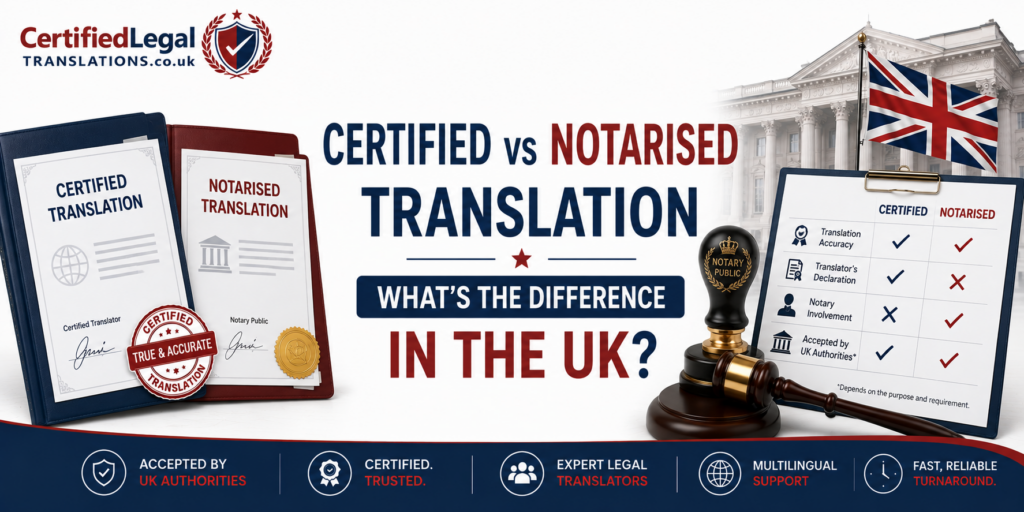
A certified translation submitted with a Companies House filing needs a signed statement confirming it’s a true and accurate translation of the original, the translator’s full name and contact details, and the date the work was completed. The original foreign-language document is filed alongside it — Companies House, like most UK authorities, wants both together, not the translation on its own, and a translation submitted without its source can be treated as unverifiable.
Names matter more than people expect here. Company names, director names and the names of subscribers on your constitutional documents need to match across every filing exactly — a transliteration difference between your certificate of incorporation and your UK establishment registration can trigger a query that delays the whole application.
Our company formation document translation service is built around exactly this filing standard, so constitutional documents, accounts and supporting evidence all arrive ready to submit as one consistent, correctly certified set.
Frequently Asked Questions
Do I Need A Certified Translation To Set Up A Brand-New Uk Limited Company?
Generally no. A fresh UK company incorporation is completed directly through English-language forms, so there’s no foreign-language original requiring translation, unless a director’s supporting identity documents are in another language.
What Happens If I Miss The One-Month Registration Deadline While Waiting On A Translation?
Companies House can treat the registration as non-compliant, which may affect your UK establishment’s standing. Start the translation as soon as you know you’re registering, rather than after your other paperwork is ready.
Can Our Overseas Company’S Own In-House Translator Certify The Documents?
It’s safer not to. Companies House and most UK authorities expect certification from an independent professional translator with no direct stake in the company, which is harder to challenge than a self-produced version.
Do Our Accounts Always Need Translating Alongside The Constitutional Documents?
Only if your parent company is required to file those accounts publicly under its own jurisdiction’s law. If there’s no public filing obligation at home, this specific translation requirement doesn’t apply to you.
Will The Same Certified Translation Work For Both Companies House And Our Uk Bank?
Sometimes, but not always. Banks often set their own certification expectations independently of Companies House, so it’s worth confirming with your bank before assuming one translation covers both.
Does Our Certificate Of Incorporation Need Apostilling As Well As Translating?
Not for Companies House itself, in most cases — a certified translation alongside a certified copy of the original is usually sufficient. Some banks or third parties may separately ask for an apostille on the original document; check with whoever is requesting it before ordering one unnecessarily.
Get Your Overseas Company Documents Translated And Certified
Whether you’re filing Form OS IN01 for the first time or updating an existing UK establishment’s details, the paperwork moves faster when the translation is filed correctly the first time. Send us your constitutional documents and accounts, tell us your registration deadline, and our specialists will confirm exactly what Companies House needs before any work begins.
Get Your Company Documents Certified and we’ll come back with a turnaround time the same day.